 Dr. Rick Bittner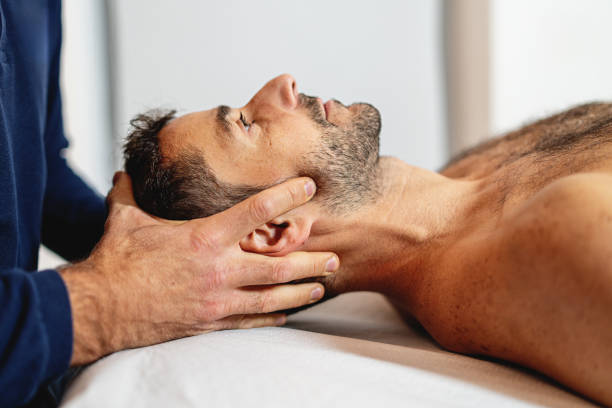
Every summer, Bozeman empties onto the highway. Yellowstone is ninety minutes south, Glacier is a long day north, and half the town seems to be driving to a wedding, a reunion, or a trailhead three states away. It's one of the best parts of living here — and one of the most common reasons patients walk into our office in July with a neck that won't turn.
We call it road trip neck, and it's remarkably predictable. The good news: most of it is preventable. Here's what's happening on those long drives — and what to do about it.
Why sitting still hurts your neck
Your neck is built for movement. Hold any position long enough — even a good one — and the muscles supporting your head begin to fatigue. Behind the wheel, three things stack up against you:
- Forward head posture. As the miles roll by, your head drifts toward the windshield. Every inch forward increases the load your neck muscles carry, and after a few hours those small stabilizers are worn out.
- Static muscle load. Driving asks your neck and shoulders to hold one contraction for hours. Muscles that never get to relax become tight, tender, and prone to spasm.
- Road vibration. The constant low-level vibration of highway driving fatigues muscles and joints faster than sitting at a desk ever would.
No mystery, then, why you climb out of the car in West Yellowstone feeling twenty years older.
Your neck can handle a long drive. What it can't handle is a long drive spent frozen in one position.
Set your seat up right
Most road trip neck starts before you leave the driveway. Two minutes of setup makes a real difference:
- Seat angle: slightly reclined — roughly 100 to 110 degrees — so the seat carries some of your weight without pulling your head forward.
- Headrest height: the middle of the headrest should meet the back of your head, and your head should actually touch it. If your head floats inches in front, your neck is doing all the work.
- Lumbar support: a built-in adjustment or a rolled-up sweatshirt behind your lower back both work. When the low back slumps, the head follows.
- Steering wheel distance: close enough that your elbows stay softly bent and your shoulders relaxed — not shrugged, not reaching.
- The mirror trick: set your mirrors while sitting tall. Later, when you suddenly can't see behind you properly, it's a built-in alarm that you've started slouching. Sit back up instead of re-tilting the mirror.
2407 W Main St. Suite 102, Bozeman · (406) 548-8822
The 90-minute rule
No seat setup survives six straight hours. Our rule of thumb: every 90 minutes, stop and walk for two minutes — usually as simple as picking the far gas pump and doing a lap around the station. While you're stopped, run through four quick stretches, none of which will draw a second glance:
- Chin tucks: standing tall, glide your chin straight back — yes, make a double chin — hold five seconds, repeat five times. Nothing resets forward head posture better.
- Shoulder rolls: ten slow, big rolls backward to unwind the shrug you've been holding since Livingston.
- Doorway or side stretch: brace a forearm on the door frame and open gently through the chest, or reach one arm overhead and lean away. Hold 15–20 seconds per side.
- Standing extension: hands on hips, gently arch backward a few times to reverse hours of sitting flexed.
Passengers get it too
You don't need a steering wheel to earn a stiff neck. Passengers spend the same hours looking down at a phone, and that head-dropped posture asks the neck to support far more effective weight than it's designed for. Napping against the window with your neck bent sideways doesn't help either. Riding shotgun? Bring the phone up toward eye level, and if you plan to sleep, use a travel pillow behind your neck — not wedged under one ear.
After you're home
Made it back to Bozeman a little stiff? Start simple: heat on the neck and shoulders for 15–20 minutes to relax tight muscles, then gentle range-of-motion — slow nods, slow turns, easy ear-to-shoulder tilts, never forcing through pain. A massage in the days after a long trip can help release what the road tightened up, and both of our therapists have decades of experience with exactly this kind of tension.
Most road trip neck settles within a few days. But some symptoms deserve an evaluation rather than a wait-and-see: headaches that linger, pain that isn't improving after a few days, or tingling that runs into your shoulders or arms. Those are whiplash-like patterns — sustained load and vibration can irritate the same joints and nerves a fender-bender does — and they respond best to early care.
At Able Chiropractic, we'll evaluate what's actually going on, realign what the road threw off, and help you get moving again — usually the same day you walk in. No referral, no long wait. Just come see us on West Main.