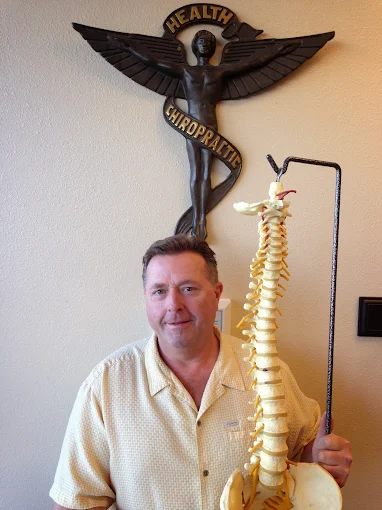
 Dr. Rick Bittner
School's been back in session for a few weeks now, which means the backpacks have filled up and the after-school screen time has kicked in. Every fall I see a wave of kids and teenagers with the same two complaints: a sore neck or upper back, and a low back that aches by the end of the day. The parents are usually surprised. Kids aren't supposed to have back pain.
They're not, and most of the time it isn't anything serious. It's mechanical, it's predictable, and it's fixable, usually with a few habit changes at home and occasionally a gentle adjustment. Here's what to look for and what to do.
The backpack test
The number I give parents is fifteen percent. A backpack should weigh no more than about fifteen percent of your child's body weight, and ten percent is better for younger kids. For a sixty-pound second grader, that's six to nine pounds, which is less than you'd think once a water bottle, a Chromebook, and a lunch are in there. For a hundred-and-twenty-pound freshman, it's twelve to eighteen pounds.
Put the loaded pack on your bathroom scale this week. Most parents are shocked.
Beyond weight, watch how it's worn. The classic signs of a pack problem:
- One shoulder. Slinging the pack over one shoulder loads the spine unevenly every single day. Both straps, always.
- Hanging low. The bottom of the pack should sit at or just above the waist, not swinging against the backside. Tighten the straps until it rides snug against the mid-back.
- Leaning forward. If your child walks bent forward to counterbalance the pack, it's too heavy or worn too low.
- Red marks or complaints of tingling in the arms. Straps that dig in are compressing nerves and blood vessels at the shoulder. Wider, padded straps and a lighter load fix this.
Pack heavy items closest to the back. Use the waist or chest strap if the pack has one. And clean it out weekly; the accumulated junk is usually a few pounds on its own.
The screen slump
The second pattern is newer and, honestly, harder to fix. Kids look down at phones, tablets, and laptops for hours, and the position matters more than the time. When the head tilts forward to look at a screen in the lap, the effective load on the neck multiplies. At a forty-five-degree tilt, the neck is supporting something like fifty pounds of force instead of the usual ten to twelve. Do that for three hours a day and the small muscles at the base of the skull and across the upper back never get a break.
Symptoms parents describe: headaches after school, a "tight" neck, rounded shoulders that are starting to look permanent, and a kid who cracks their own neck constantly.
A gentle evaluation, no pressure, and honest advice about whether an adjustment would help.
Three fixes that actually stick
I've learned not to bother telling teenagers to use screens less. Instead, change how they use them.
- Bring the screen up. Phone at eye level, elbows tucked, rather than in the lap. Laptop on a stack of books or a cheap stand with a separate keyboard for homework. The head stays over the shoulders, and the neck load drops dramatically.
- The twenty-minute reset. Every twenty minutes of screen time, stand up and do five chin tucks (glide the chin straight back to make a double chin, hold for three seconds) and five slow shoulder rolls backward. It takes thirty seconds. Make it a house rule, not a suggestion.
- Move, in any form. The single best antidote to sitting posture is loaded movement: sports, climbing at the gym, biking to school, wrestling with siblings. Kids who move a lot tolerate screens much better than kids who don't.
What a kids' visit looks like here
Parents sometimes hesitate to bring a child to a chiropractor because they picture adult-style adjustments. Pediatric care is different. We use a fraction of the force, often no more pressure than you'd use to check a ripe tomato, and every technique is adapted to the child's age and size. Nothing happens without explanation, and the kid always knows what's coming.
A first visit is mostly a conversation and an evaluation: how they sit, how they stand, how their spine and pelvis move, where the tension pattern lives. Sometimes the answer is just the habit changes above and no treatment at all. Sometimes a gentle adjustment or two resolves a pattern that stretching alone won't. Either way, you'll leave knowing what's going on.
Kids 12 and under receive a free first visit, including the evaluation and any adjustment we recommend. It's our way of making sure a family never has to guess whether something is worth checking.
When to bring them in
Come see us if your child has neck, back, or headache complaints more than a couple of times a week, if you notice one shoulder or hip sitting visibly higher than the other, if they're avoiding activities they used to enjoy because of discomfort, or if the posture changes you're seeing don't improve after a few weeks of the fixes above. Sudden severe pain, pain after a significant fall or collision, or any numbness or weakness should be evaluated promptly.
Walk-ins are welcome every weekday at 2407 W Main. Bring the backpack. We'll weigh it together.